
Walkthrough
Step-by-step paths through owlcoda’s core workflows. Each path shows how the harness is entered, used, and carried forward.
Path 1 — Starting from zero
You have an idea but no structured project yet. This path shows how owlcoda creates initial project context from a rough description.
Describe your intent
You tell owlcoda what you’re trying to build or solve. This can be as rough as a paragraph or as structured as a brief.
Context is created
owlcoda generates a structured context: intent, constraints, open questions, and initial work items. This becomes the handoff document for all future sessions.
Begin execution or hand off
You can start working immediately, or close the session knowing the context is preserved for later — whether you or someone else picks it up.
Path 2 — Picking up an existing project
Someone else started this project, or you did but lost track. This path shows how owlcoda builds a handoff context from existing materials.
Point to existing materials
Provide owlcoda with whatever exists: repos, docs, notes, previous chat exports. It doesn’t need everything — it works with what’s available.
Structured handoff context
owlcoda produces a handoff summary: what’s been done, what’s pending, key decisions, and recommended next actions.
Oriented and ready
You now have structured awareness of the project state. You can ask questions, start executing, or review specific areas.
Path 3 — Returning to continue work
You were here before. You took a break. Now you’re back. This is the path owlcoda is optimized for.
Open your project
Open the project context. owlcoda immediately shows you the current state — no scrolling through old messages.
Review what changed
See what happened since your last session — completed items, new decisions, anything that shifted while you were away.
Continue from where you stopped
Pick up the next pending action. The context is already loaded — you’re productive in seconds, not minutes.
Path 4 — Review
You want to inspect the current state without changing anything. Review is the read-only path.
Enter review mode
Request a review of the project. owlcoda presents the structured state: completed work, in-progress items, pending decisions, and blockers.
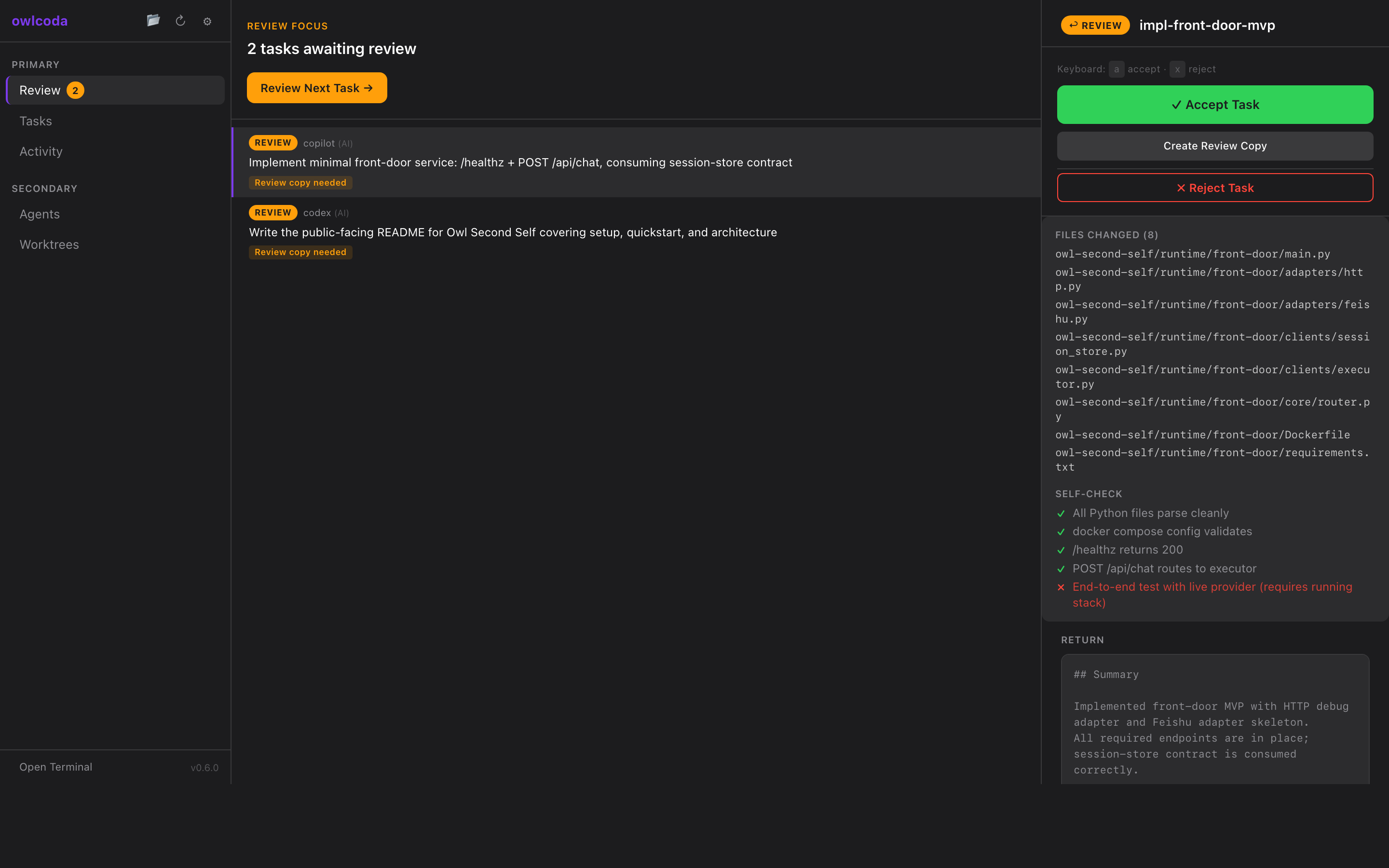
Drill into specifics
Inspect individual decisions, work items, or context areas. Everything is structured — no searching through chat logs.
Path 5 — Execution
You’re ready to move work forward. Execution is the action path.
Select a work item
Choose from pending actions. owlcoda shows what’s ready, what’s blocked, and what depends on what.
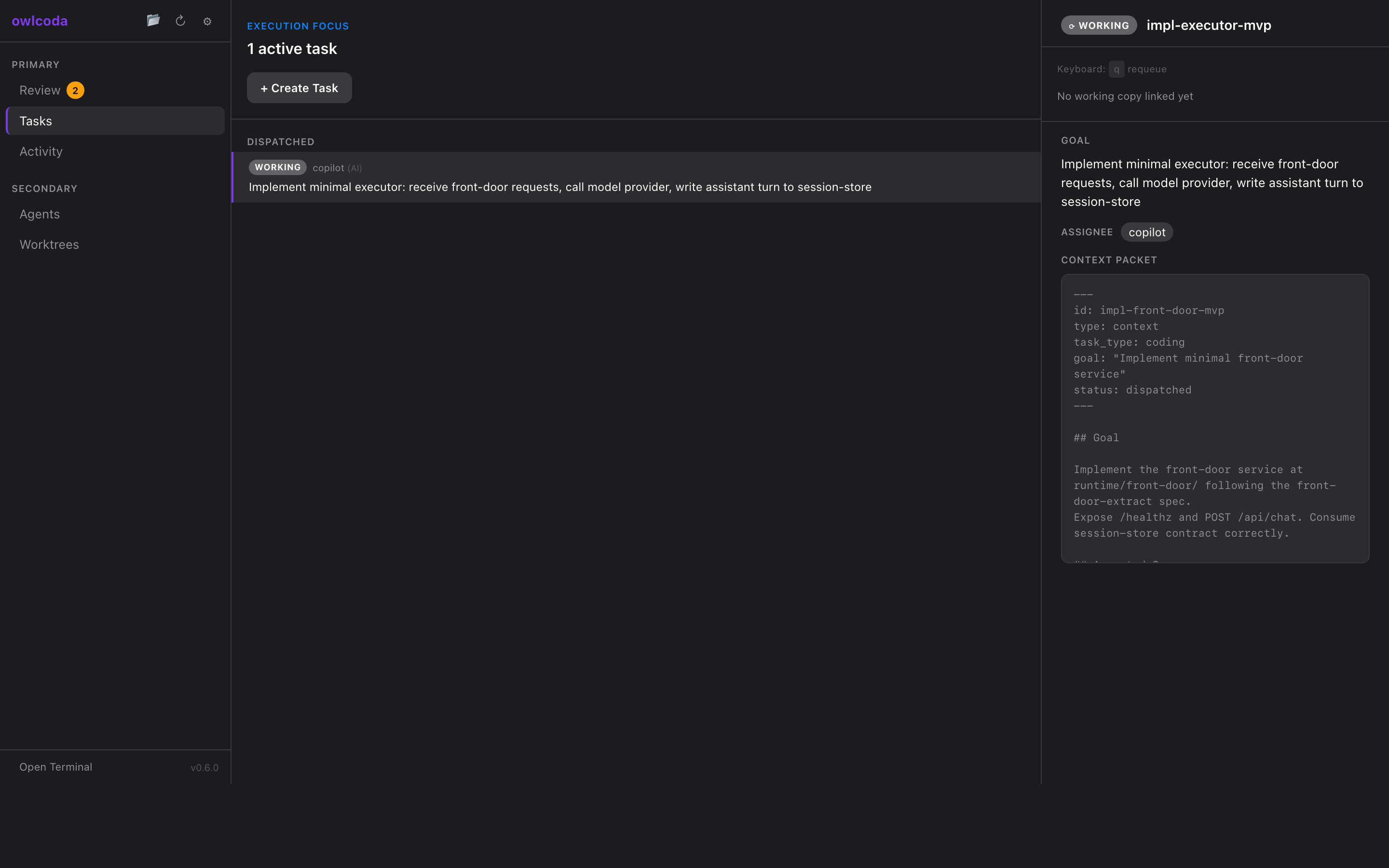
Execute with context
Work happens within the structured context. The model (or you) has full awareness of the project state, constraints, and history.
Context updates automatically
When execution completes, the project context updates: items are marked done, new items may be created, and the handoff state reflects reality.
Path 6 — Reset
A direction didn’t work, or a phase is complete. Reset lets you close out and start fresh without losing history.
Initiate reset
Tell owlcoda you want to reset the current phase. It asks you to confirm and optionally note why.
History preserved, slate cleared
The previous phase is archived — decisions and learnings are kept. But the active work context is clean, ready for a new direction.
Path 7 — Multi-model handoff
You’ve been working with one model and want to switch to another — or use multiple models for different parts of the work.
Work with Model A
You complete a phase of work using one model. The project context captures everything that happened — not just the chat, but the structured state.
Hand off to Model B
Open a new session with a different model. Load the same project context. Model B has full awareness of what Model A did, without needing the original conversation.
Continuity without lock-in
You’re not dependent on any single model’s memory or conversation history. The continuity lives in the structured context, not in the model.
Want to know what’s working today and what’s coming next?
View Capabilities →